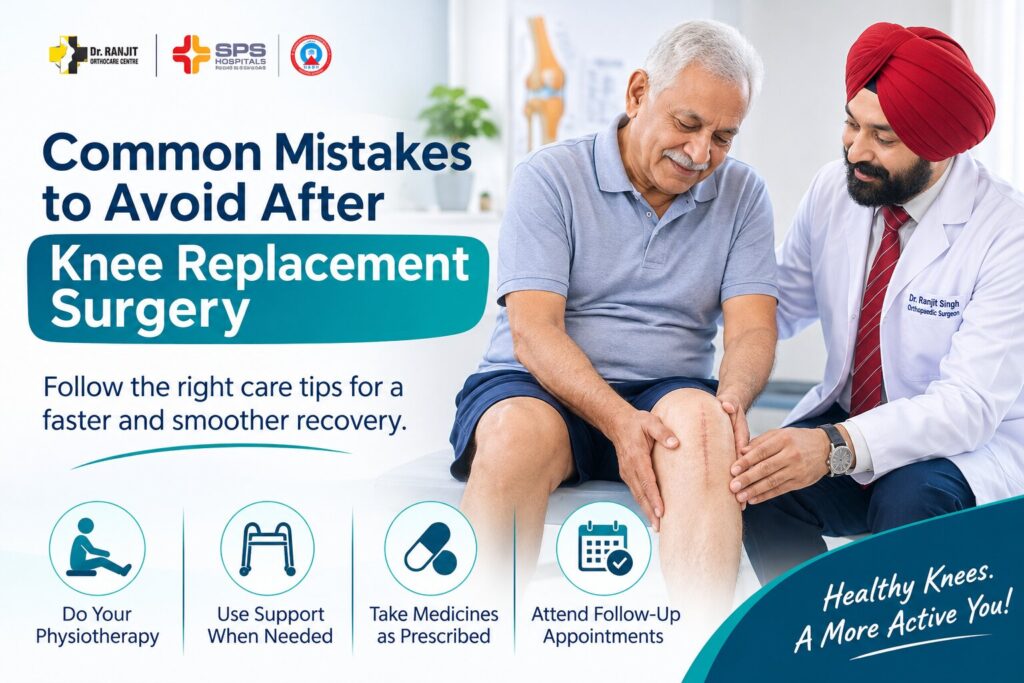
Common Mistakes to Avoid After Knee Replacement Surgery
November 2, 2026 | dr26ranjit26ortho
Knee replacement surgery can help people regain mobility, reduce chronic knee pain and return to everyday activities. However, surgery is only one part of the recovery journey. Proper post-operative care, regular physiotherapy and healthy lifestyle habits are equally important for achieving good results.
Many patients unknowingly make mistakes after knee replacement surgery that can slow down healing, increase discomfort or affect their recovery. Understanding what to avoid can help you protect your new knee and recover more confidently.
Here are some common mistakes you should avoid after knee replacement surgery.
1. Skipping Physiotherapy and Recommended Exercises
One of the most common mistakes is avoiding physiotherapy because of mild pain or discomfort. After surgery, your knee muscles need time and regular exercise to regain strength, flexibility and movement.
Skipping prescribed exercises may lead to stiffness and limited knee movement. Follow your physiotherapist’s instructions and perform your recommended exercises consistently without overexerting yourself.
2. Walking Without Proper Support
Some patients stop using walkers, crutches or walking sticks too early because they feel confident while walking. However, balance and muscle strength may still be recovering.
Walking without proper support can increase the risk of falling and injuring your new knee. Use walking aids until your surgeon or physiotherapist confirms that you can safely walk independently.
3. Ignoring Pain and Swelling
Mild pain and swelling are common during the recovery period. However, ignoring increasing pain, unusual swelling, rednes or wound discharge can be dangerous.
These symptoms may indicate complications such as infection or blood clots. Contact your healthcare team if you notice unusual or worsening symptoms instead of trying to manage them yourself.
4. Returning to Daily Activities Too Quickly
Feeling better after surgery does not mean your knee has completely healed. Returning too quickly to demanding activities, lifting heavy objects, climbing stairs excessively or standing for long periods can put unnecessary stress on your recovering joint.
Gradually increase your daily activities according to your doctor’s advice. Give your body enough time to heal before returning to your regular routine.
5. Not Taking Medicines as Prescribed
Pain management and prescribed medicines play an important role in recovery. Some patients stop taking medicines once they start feeling better or change their dosage without consulting their doctor.
This can affect pain control and increase the risk of complications. Always follow your surgeon’s medication instructions, particularly regarding blood-thinning medicines.
6. Neglecting Wound Care and Hygiene
Keeping the surgical wound clean and following dressing instructions are essential for preventing infection. Avoid touching the wound unnecessarily, applying unapproved creams or getting it wet before your doctor allows it.
Follow the wound-care instructions provided by your medical team and report any unusual discharge, redness or fever promptly.
7. Ignoring Follow-Up Appointments
Skipping follow-up appointments is another mistake patients should avoid. Regular check-ups allow your surgeon to monitor healing, assess knee movement and identify potential complications.
Even when you feel comfortable, attend your scheduled appointments and discuss any concerns about your recovery.
8. Returning to High-Impact Activities Too Soon
Running, jumping, heavy workouts and other high-impact activities can put excessive stress on your new knee. Avoid restarting these activities without medical clearance.
Instead, gradually return to suitable low-impact activities recommended by your doctor and physiotherapist.
Final Thoughts
A successful knee replacement recovery requires patience, consistency and proper medical guidance. Avoiding these common mistakes can help support healing, improve mobility and protect your new knee in the long term.
At Dr. Ranjit Orthocare Centre, Dr. Ranjit Singh focuses on advanced orthopaedic and joint replacement care, helping patients understand their treatment and recovery journey. Whether you are considering knee replacement surgery or recovering after the procedure, following a personalised recovery plan is essential.